Design the Day Around the Dip: What the Afternoon Slump Teaches Us About Team Structure
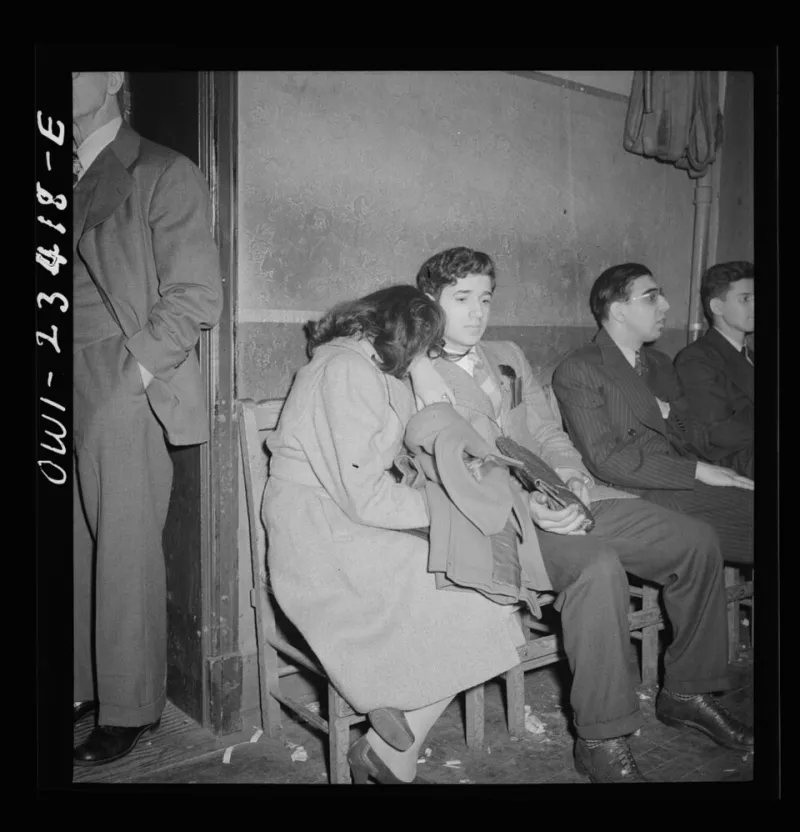
Photo: Marjory Collins, Public domain, via Wikimedia Commons
There is a piece of management folklore so widely repeated that it has taken on the status of scripture: keep teams small enough to feed with two pizzas, and collaboration will flourish. The rule, attributed to a certain American tech giant, has travelled across the Atlantic and settled comfortably into British boardrooms, where it is invoked in reorganisation documents with the confidence of a law of nature.
It is not a law of nature. It is a heuristic about catering logistics dressed up as organisational science. And in its obsessive focus on how many people sit around a table, it misses the question that actually determines whether a team collaborates well: when, in the working day, are those people genuinely at their best?
The Dip Nobody Diarises
Ask any office worker in Manchester, Leeds or Croydon to describe their afternoon and you will hear the same story. A strong morning. A lunch break that is often shorter than advertised. Then, somewhere around half past three, a fog. Concentration frays, patience shortens, and the quality of thinking drops measurably.
This is not weakness or poor timekeeping. It is human physiology. Circadian rhythms produce a natural trough in alertness in the mid-to-late afternoon, and research on cognitive performance has consistently shown that complex reasoning and creative problem-solving suffer during this window. Chronobiologists have known about it for decades. British employers, by and large, have structured their days as if it did not exist.
Consider where we typically put our most demanding collaborative work. Cross-functional workshops, brainstorms, project kick-offs, all-hands meetings — a remarkable number are scheduled for two o'clock or later, precisely when the collective brainpower in the room is heading downhill. We then wonder why decisions made at four o'clock get revisited at nine the next morning, or why the same people dominate the conversation because everyone else is too tired to push back.
Headcount Is the Wrong Variable
The two-pizza rule asks: how many people should be in this team? The better question is: what kind of work are we asking this team to do, and at what point in the day?
A team of six doing deep collaborative work at ten in the morning will outperform a team of four doing the same work at half past three. Energy, not headcount, is the scarce resource. Yet almost no organisation maps its meeting schedule against energy rhythms. Calendars are arranged by availability; rooms are booked by convenience; nobody stops to ask whether the people in the room are cognitively present.
This matters more in Britain than the imported dogma acknowledges. Our working patterns — long commutes into city centres, lunch breaks skipped at desks, a cultural habit of pushing through — tend to compress productive energy into a narrow morning window. The American tech campuses that produced the two-pizza rule were built on the assumption that employees' whole day belonged to the employer, with gyms and canteens designed to sustain energy artificially. Most UK workplaces offer no such scaffolding. Designing our teams to an American rule while ignoring our own conditions is a category error.
Restructuring Around Rhythm
What would it look like to take energy seriously as a design principle? The changes are neither expensive nor complicated, but they do require managers to treat the working day as a system rather than a series of slots.
First, protect the morning for collaborative depth. Decisions, creative work and anything requiring genuine joint thinking belong between nine and noon. If a workshop cannot fit in that window, question whether it needs to happen at all.
Second, move the half-past-three slot to work that suits it. Status updates, admin, individual tasks, gentle one-to-ones — the afternoon trough is not useless, it is simply unsuited to high-stakes group reasoning. Match the work to the energy and both improve.
Third, treat the dip as a legitimate scheduling constraint. Some organisations have experimented with meeting-free afternoons; others simply adopt a norm that no decision-making meetings are booked after three. Either way, the principle is the same: stop pretending the trough is a scheduling failure of individuals and start treating it as a fact of collective biology.
Fourth, notice what happens to team cohesion when energy is respected. Teams that stop fighting their own physiology argue less, listen more and make better decisions together. Much of what we call poor collaboration is, on inspection, simply tired people being asked to perform at their worst hour.
A Distinctly British Fix
There is something fitting about the alternative model being closer to home. The traditional British working day — a proper lunch, a mid-afternoon pause, work that respects the rhythm of the person doing it — was not built on sentimentality. It was built on generations of accumulated wisdom about how people actually function.
The two-pizza rule will no doubt survive, because simple rules travel well. But UK managers would do well to remember that team design is not about how many people you can fit around a table. It is about when you gather them, and whether they arrive with the energy to contribute.
Design the day around the dip, and the team will thank you for it. Ignore it, and no amount of pizza — two or otherwise — will save the four o'clock meeting from itself.