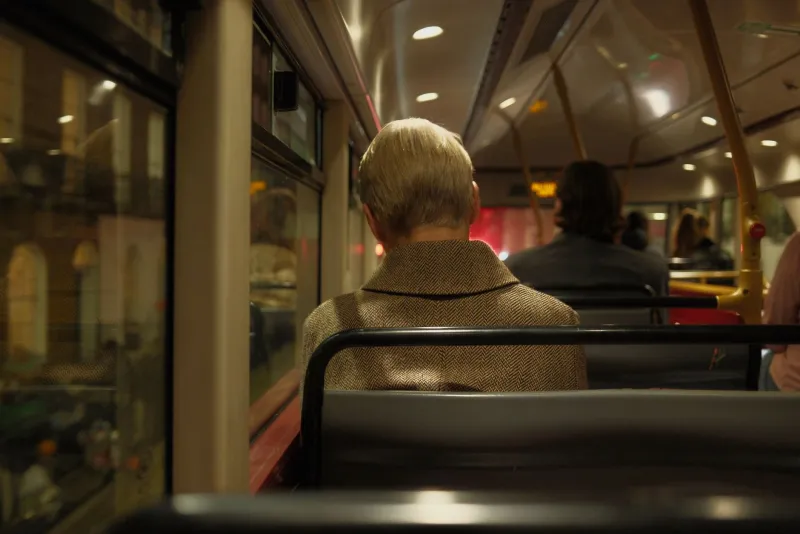
Before the Difficult Email, There Was the Drizzle: What We Lose When Casual Talk Disappears

Photo: Unknown authorUnknown author, PDM-owner, via Wikimedia Commons
There is a particular kind of British conversation that outsiders find baffling. Two colleagues meet at the kettle. One remarks that it's 'turning a bit grim out there'. The other agrees, adds that it 'was tipping it down in Leeds this morning', and both nod with genuine satisfaction. Nothing has been communicated. Everything has been communicated.
We tend to treat this exchange as national eccentricity — charming, harmless, entirely dispensable. That assumption deserves challenging. The weather chat is not empty; it is load-bearing. And in the hybrid workplaces that now dominate British professional life, it is quietly disappearing, with consequences most managers have not thought to trace.
The Function Beneath the Fillers
Small talk about rain, frost or an unseasonably mild Tuesday is a low-stakes transaction. Nobody risks anything by offering an opinion on the wind in Slough. That is precisely the point. These exchanges allow colleagues to signal goodwill, establish rhythm and confirm mutual attention without exposing vulnerability or inviting disagreement.
Psychologists sometimes describe this as establishing a baseline of rapport. In plainer terms: it is the warm-up before the workout. Teams that share a comfortable idle channel find it easier to move onto harder frequencies. The person you have joked with about the hailstone in the car park is easier to approach when you need to say something genuinely difficult — about workload, about a mistake, about a missed deadline.
Strip that channel away and hard conversations do not disappear. They simply arrive cold, unbuffered, by email, at 9:47pm.
What Hybrid Working Took
The office kitchen, the lift, the walk to the station — these were never designed as collaboration tools, but they performed that role for decades. Remote and hybrid working has removed most of them. What replaced them is a far more purposeful environment: a Slack message is sent because there is something to ask; a video call begins because there is something to decide.
Purposeful communication is efficient, and efficiency is not the enemy. But a team that only ever speaks with intent loses the idle channel entirely. Many managers have observed the symptom without naming the cause: conversations feel sharper, colleagues read tone into terse messages, and the small frictions that were once dissolved by a five-minute chat now harden into grievances.
The British workplace has, in effect, lost its weather.
An Audit for Managers
If you lead a team, it is worth asking a simple question: when was the last genuinely purposeless conversation on this team? Not the organised social — the spontaneous, unforced exchange that served no agenda. If you cannot remember, consider the following audit.
Map the idle channels. List every place a colleague could plausibly start a conversation that isn't about work. In an office, this might be the kitchen, the smokers' corner, the car park. Remotely, it might be a general channel, a camera-on arrival window before meetings, or nothing at all. Be honest about what the list contains.
Check who uses them. Idle talk that only happens between the same three people is not a team norm, it is a friendship. Note whether new starters, remote colleagues and quieter team members have any access to the casual channel — or whether they exist purely in transactional space.
Test the hard-conversation route. When something difficult needs raising, what path does it take? If the answer is always 'an email' or 'a calendar invite with an ominous title', the warm-up rapport is missing, and the difficulty is arriving unsoftened.
Rebuilding the Weather Channel
None of this requires forced fun, which British workers can smell from a considerable distance. It requires recreating the conditions in which idle talk can occur naturally.
A dedicated non-work channel — pets, commutes, a running league table of whose garden is worst affected by the rain — gives people somewhere purposeless to go. The trick is that managers must participate genuinely and then leave it alone. The moment such channels are monitored, measured or referenced in appraisals, they stop being weather and start being work.
On video calls, the five minutes before everyone arrives used to do this job automatically. Protect it. Join early, cameras on, and resist the urge to start on the agenda. Alternatively, open with thirty seconds of genuine unstructured chat and let it run its course. It will feel inefficient. It is the opposite.
For distributed teams, some firms have found value in pairing colleagues for short, agenda-free catch-ups — not mentoring, not check-ins, just two people talking. The content matters less than the practice of speaking without a deliverable attached.
The Point of It All
No one is suggesting that a remark about drizzle will transform an organisation. But culture is not built in grand gestures; it accumulates in small, repeated, low-risk exchanges. The weather talk was never about the weather. It was a daily, distributed act of goodwill — proof, exchanged in seconds, that we are on the same side.
Teams that have lost it should not mourn. They should rebuild. The forecast, after all, remains reliably British: there will always be something to complain about together. That, it turns out, is a team-building resource worth protecting.